Your Turntable Is Judging You: Inside America's New Collector Economy of Music Stuff
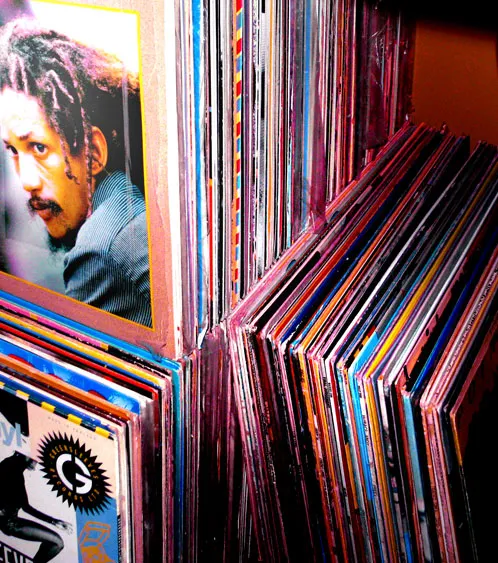
Photo: dubdem sound system, CC BY 2.0, via Wikimedia Commons
Walk into any twenty-something's apartment in Austin, Portland, or Brooklyn and you'll find it: a record shelf organized with the precision of a museum archive. Some of those records have been played. Many of them haven't. A few still have the shrink wrap on, carefully sliced just enough to reveal the spine — because even the collectors who never spin the vinyl want you to know it's real.
Welcome to the encore economy, where the music is free and the stuff is everything.
The Merch You Buy and the Merch You Keep
There's an unspoken rule in modern fandom: there are clothes you wear and there are clothes you preserve. The tour tee from that one night in 2023? That's an artifact now. It lives folded in a drawer, tagged, occasionally photographed for Instagram like a relic from a pilgrimage.
It sounds absurd until you think about what the shirt actually represents. It's not fabric. It's proof of presence — a receipt for a night you can't relive. In a culture where experiences are the ultimate currency, merch is the physical evidence that you were there when it mattered.
That's why the worst thing you can do to some fans is suggest they actually wear the thing. Fading a limited tee in the wash feels, to them, like spending a savings account you can't refill.
Scarcity Is the Whole Business Model
Nobody engineered this accidentally. The drop culture that took over streetwear — limited quantities, countdown timers, one-per-customer rules — has fully colonized music merchandise. Vinyl variants in seven different colors. Signed inserts for the first 500 orders. Retail exclusives that only exist at one chain in one region of the country.
The result is a secondary market that behaves like sneaker reselling. Records that retailed for $35 flip for hundreds within hours. A tour-exclusive poster from a randomly announced pop-up becomes a collector's grail. The scarcity isn't a side effect of production limits anymore — it's the product.
And fans aren't victims here. They're willing participants who understand the game. Buying the limited pressing is a signal: I'm the kind of person who moves fast, cares deeply, and was paying attention.
Records as Decor, Tees as Trophies
There's a reason vinyl sales keep climbing even though streaming owns literally everything about how Americans consume music. Nobody's buying a $40 LP because they prefer analog audio quality — most of them don't own a turntable that could reveal the difference.
They're buying it because a record is the most beautiful way to display your taste. Spines lined up on a shelf are a self-portrait in cardboard. Guests scan them the way they used to scan a bookshelf, reading who you are through what you own.
The same logic applies to the unworn hoodie and the framed concert poster. This is identity signaling with a barcode. Your taste, made tangible.
So Is Any of This Bad?
Honestly? Mostly no. Critics wring their hands about consumerism, and sure, there's a version of this that's just FOMO with a soundtrack. But most fans describe the ritual as something closer to devotion than shopping. The unplayed record is a promise. The unworn shirt is a memory kept safe.
The music itself became infinite and weightless — so fans started anchoring it to objects they can hold. In a world where any song is a tap away, the things you chose to own say more than the things you stream ever could.
Just maybe wash the shirt once. The band would want you to.