Healing Frequencies or Just Good Marketing? Inside the Music Wellness Takeover
Somewhere between the "432 Hz healing frequencies" videos and the licensed therapist posting her "nervous system reset playlist" to 800,000 followers, music became wellness. Not metaphorically — we've always known a good song can lift your mood. But literally, clinically, with timestamps and breathing cues and links to Spotify in the bio.
The music therapist influencer is a real thing now, and the space is growing fast. The question worth asking is whether this movement is genuinely helping people, quietly reshaping the music industry, or doing both things simultaneously while also being a very effective content strategy.
From the Clinic to the For You Page
Board-certified music therapists have existed for decades. It's a legitimate clinical field with graduate programs, professional certifications, and applications in hospitals, schools, and rehabilitation centers. What's new is the migration of that professional identity — or at least the aesthetic of it — onto social platforms where the audience is massive and the vetting is minimal.
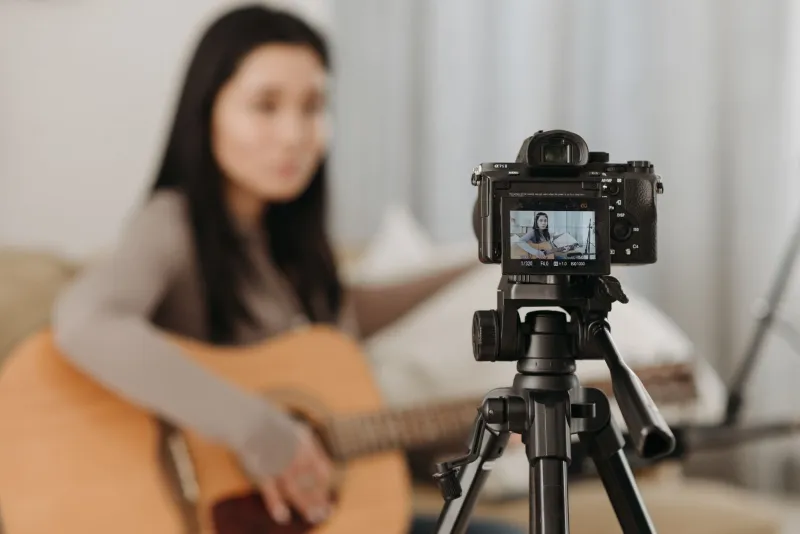
On TikTok, the music-wellness creator spectrum runs wide. On one end, you have credentialed music therapists like those affiliated with the American Music Therapy Association who use their platforms to share genuinely evidence-based content. On the other end, there are lifestyle creators with no clinical background at all who've discovered that framing a playlist as "trauma-informed" or "vagus nerve activating" is extraordinarily good for engagement.
The gap between those two ends of the spectrum matters — a lot — but it's not always visible to the average scroller.
What the Science Actually Says
Here's the honest version: music does have measurable physiological effects. Slow-tempo music with low frequency content can reduce heart rate and cortisol levels. Certain rhythmic patterns have been shown to support motor recovery in stroke patients. Music with personal emotional significance activates the brain's reward circuitry in ways that overlap with other pleasure responses.
What the science does not support is most of what gets claimed in wellness content. There is no peer-reviewed evidence that 432 Hz tuning is therapeutically superior to standard 440 Hz. "Binaural beats" research is promising but preliminary, and the effect sizes are modest. The idea that a specific playlist can "heal your inner child" or "detach from your ego" is not a clinical claim — it's a copywriting choice.
None of that means the playlists themselves are harmful. Listening to calming music and feeling calmer is real. But there's a meaningful difference between music that helps you relax and music that "rewires your nervous system," and conflating the two is doing some work for somebody.
The Ripple Effect on Artists
What's genuinely fascinating about this trend — and what makes it music industry news, not just wellness industry news — is how dramatically it's affecting which artists get traction.
Artists whose music fits the "healing" aesthetic have seen streaming numbers climb on the back of wellness playlist placements. Ambient composers, soft acoustic singer-songwriters, and artists working in what's loosely called "slow music" are finding audiences they never had before, driven by creators who need a sonic backdrop for their breathwork videos.
Some artists have leaned into it deliberately, releasing instrumental versions of songs specifically for the wellness playlist market, or framing new projects around mental health themes in ways that guarantee placement in that content ecosystem. It's a legitimate marketing lane, and a growing one.
Others find the framing uncomfortable — worried that their music is being reduced to functional background noise rather than engaged listening. There's a version of this trend where music becomes something you use rather than something you experience, and not everyone making music is happy about that distinction.
The Community That's Actually Forming
Strip away the skepticism for a moment, though, and something genuinely interesting is happening at the community level. People who might never have sought out music intentionally are now building listening practices — morning playlists, wind-down rituals, focus sessions — around the idea that sound can be a wellness tool.
That's not nothing. Music streaming data consistently shows that users who engage with music in intentional, ritual ways have deeper and more sustained relationships with it overall. The wellness framing, whatever its scientific accuracy, is getting people to slow down and actually listen — and that has real value in an era of passive, background consumption.
The mental health conversation that surrounds this content is also reaching people who need it. Even if the playlist itself isn't clinically therapeutic, the comment sections under music-wellness content are full of people sharing experiences with anxiety, grief, and burnout in ways that feel genuinely communal. The music is a gathering point.
So What's the Verdict?
Honestly? It's complicated — which is probably the most accurate thing you can say about any trend that sits at the intersection of commerce, science, and human emotion.
The music therapist influencer phenomenon is part genuine movement, part marketing evolution, and part cultural response to a moment when a lot of Americans are struggling and looking for accessible tools to cope. Music has always been one of those tools. What's changed is the infrastructure around it — the content, the creators, the playlists designed to be prescribed.
Just maybe read the credentials before you take the diagnosis.