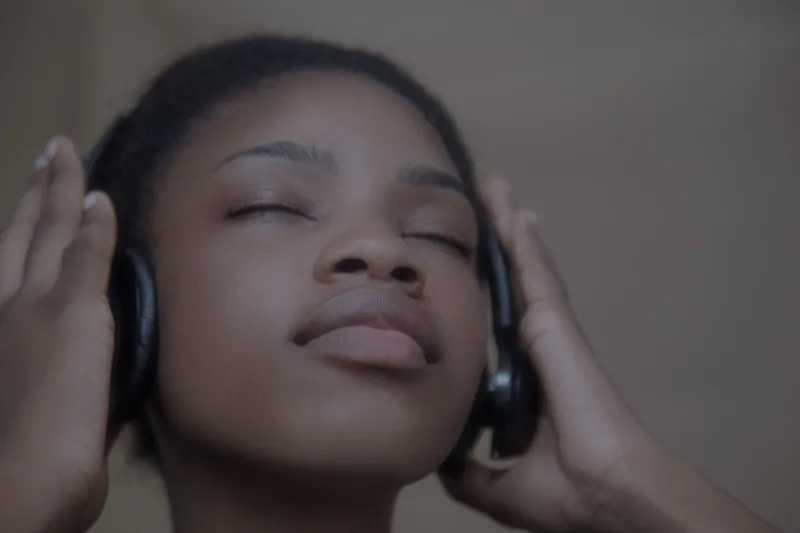
There's No Breakup Album Anymore — Here's Why That Hits Different

There used to be a script.
Relationship ends. You cry. You reach for Rumours, or 21, or Blood on the Tracks, or Lemonade, or whichever universally acknowledged heartbreak record your older sibling or college roommate handed you like a first aid kit. You listened to the whole thing. You cried more. You eventually got up off the floor. The album had done its job.
That script is gone. And honestly? It's complicated.
The Universal Breakup Album Was Never Really Universal
Let's start with a little honesty about the mythology. The idea of a single album that speaks to every broken heart was always somewhat constructed — shaped by cultural gatekeepers, radio dominance, and the fact that for most of pop music history, a relatively small number of records got the majority of the attention. When everyone listened to the same ten stations and bought albums from the same chain stores, consensus was almost inevitable.
That consensus felt meaningful. Saying "I listened to Careless Whisper on repeat for a week" was a way of communicating something about your emotional state that another person could immediately understand and locate themselves in relation to. Shared cultural touchstones aren't just nostalgic — they're a form of language.
But they were also, let's be honest, kind of limiting. The classic breakup canon was overwhelmingly white, predominantly straight, and written almost entirely from a handful of emotional perspectives. A lot of people — queer listeners, listeners of color, people whose heartbreak didn't map onto the standard narrative — were quietly improvising their own soundtracks all along. The "universal" breakup album was never quite as universal as it seemed.
What Streaming Did to Heartbreak
Streaming didn't just change how we access music. It changed the emotional architecture of how we process things through music. With 100 million songs available at any moment, the idea of reaching for a single album and committing to its specific emotional journey feels almost quaint — not because we're less sad, but because we have so many more options for how to be sad.
The modern breakup playlist is a deeply personal document. It might contain Mitski and Drake and a deep cut from an artist with 4,000 monthly listeners and that one song your ex showed you that you refuse to skip because it hurts in exactly the right way. It's assembled in real time, shaped by mood and memory and what the algorithm surfaced at 2 a.m. when you were in the worst part of it.
That's not a lesser experience. In a lot of ways, it's more honest. Your grief is specific to you. Why should the soundtrack be generic?
What We Actually Lose
Here's where it gets a little harder to be fully optimistic about the shift.
The shared cultural experience of a breakup album wasn't just about the music — it was about the conversation the music enabled. "Have you heard 21?" was a question that could open up a real exchange between two people about what they'd been through, because you both had a common reference point. The album was a bridge.
When everyone's heartbreak playlist is different, that bridge gets a lot harder to build. You can describe your playlist to someone, but it doesn't land the same way. The specificity that makes your curation meaningful to you is exactly what makes it harder to communicate to someone else.
There's also something to be said for the experience of surrendering to an artist's vision during a difficult moment. A well-constructed breakup album takes you somewhere specific — it has a shape, a beginning and an end, a kind of emotional logic. When you curate your own playlist, you're also the architect of your own grief, which is both empowering and exhausting. Sometimes you don't want to make any more decisions. You just want someone to hand you a map.
The Artists Who Are Still Trying
Interestingly, some artists are pushing back against fragmentation by doubling down on the album as emotional journey. Olivia Rodrigo's SOUR and GUTS both function as complete heartbreak arcs — they have a beginning, a messy middle, and something approaching resolution. They were clearly conceived as full-listen experiences, and listeners responded by actually listening to them that way.
Beyoncé's Lemonade is maybe the most ambitious attempt in recent memory to create a truly universal emotional document — and it worked, at least partially, precisely because it was so specific. The specificity of her experience is what made it resonate beyond her specific circumstances. Paradoxically, the more particular the pain, the more universal it often lands.
SZA's SOS lived on playlists and in shuffle rotation, but it also got listened to front-to-back by a generation of listeners who found something in its sprawling emotional mess that felt true to their own. These albums exist somewhere between the old model and the new one — they're designed to be albums but they survive in the streaming ecosystem because individual songs can stand alone too.
The Liberation in the Fragmentation
Here's the thing, though. The loss of the universal breakup album has also freed people to process grief in ways that are genuinely more personal and more honest than the script ever allowed.
When you build your own heartbreak soundtrack, you're doing something kind of profound: you're articulating, through music, exactly what your specific experience feels like. Not a generalized version of heartbreak. Yours. The songs you reach for in that moment reveal something true about you — what you're mourning, what you're angry about, what you're still holding onto.
That's not isolation. That's self-knowledge. And in a weird way, the playlist you build during the worst week of your romantic life might be the most honest self-portrait you ever make.
You don't have to share it with anyone. But if you do — if you send someone that playlist and they actually listen — they'll know you in a way that a shared reference to Rumours never quite allowed for.
Maybe that's the new script. Smaller. More specific. Harder to translate. But real in a way that the universal version never fully managed to be.