The Smaller the Room, the Bigger the Memory: Why Intimate Shows Are Gen Z's New Holy Grail
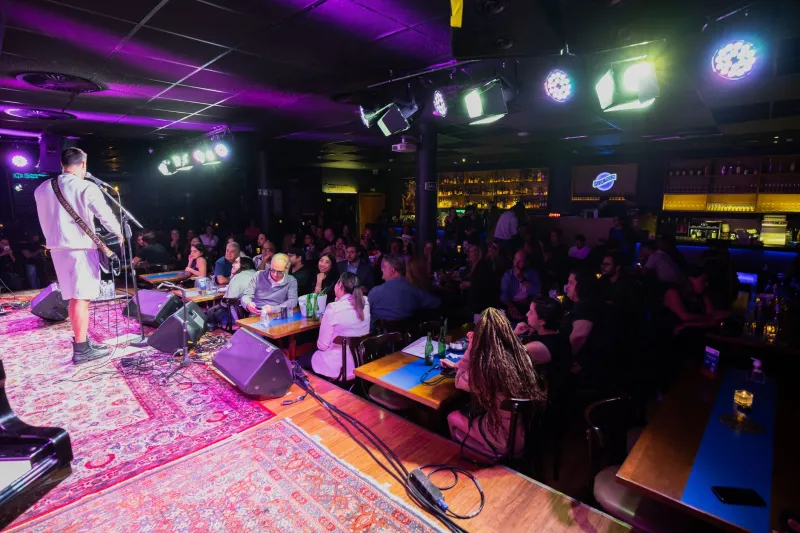
Last spring, a Brooklyn-based artist announced a show on Instagram with about 18 hours' notice. No venue name — just a neighborhood and a time. The capacity was 75 people. The tickets sold out in four minutes. People who missed it spent the next week posting about it like they'd missed a once-in-a-lifetime event.
They kind of had.
Something is happening in live music right now that doesn't fit neatly into the standard industry narrative. While the headline story is all about stadium tours breaking records and Taylor Swift single-handedly propping up local economies, there's a quieter, weirder, arguably more interesting thing going down at the other end of the size spectrum. Tiny shows. Unconventional spaces. Deliberately limited access. And a generation of listeners who will move mountains — or at least refresh a ticket page until their thumbs cramp — to be in that room.
The Anti-Arena Moment
To understand why small shows are having such a cultural moment, you have to understand what they're reacting against.
The modern arena concert experience, for all its spectacle, has a fundamental problem: scale. When you're 300 feet from the stage watching a performer on a jumbotron, you're not really at a show — you're at an event. Which is fine. Events are great. But they don't create the same kind of memory, the same sense of proximity and presence, that makes a concert feel like something that happened to you rather than something you watched.
Gen Z, more than any generation before them, has grown up with the spectacle already delivered to their phone screens in 4K. They don't need the big production to feel connected to an artist. What they can't get from a screen — what no amount of livestreaming or Instagram Story reposts can replicate — is the feeling of being in a small, charged room with 60 other people who all feel exactly the same way about a song.
That's the thing small shows sell. Not music. Presence.
What Counts as an Intimate Show Now
The format has gotten genuinely creative. We're talking house shows in someone's actual living room, rented theater spaces with seats for 200, art gallery performances, warehouse sets with deliberately obscured locations, rooftop shows announced same-day, and record store in-stores that feel more like secret rituals than promotional events.
Artists like Clairo built early cult followings partly through the intimacy of their live presence before they ever played a venue with a real sound system. Phoebe Bridgers famously played small, emotionally devastating sets in tiny rooms for years before the world caught up. More recently, artists across genres — indie, R&B, rap, electronic — have started deliberately preserving small-room shows even after they've graduated to larger venues, treating them as a separate offering rather than a relic of their come-up.
The logic is simple: you can play Madison Square Garden for the masses and still play a 150-cap room in East Nashville for the people who actually need to be that close to you. These aren't the same product. They shouldn't be priced or treated the same way.
The FOMO Economy
Let's be real about something: scarcity is doing a lot of work here. Part of what makes a 75-person show feel sacred is the knowledge that 7,500 other people wanted to be there and couldn't. That's not just psychology — it's economics.
Artists and their teams have figured out that limited-availability events create a level of cultural buzz that a regular tour date simply cannot. When tickets for a small show sell out in minutes, that sellout is the marketing. The people who missed it post about missing it. The people who made it post about making it. The event becomes a story that circulates far beyond the room itself.
This is a fundamentally different model than traditional touring, where success is measured in units sold and venues filled. In the intimate show economy, the value is in the story. The scarcity. The sense that something real and irreproducible happened in a specific room on a specific night, and you either were there or you weren't.
What It Means for Emerging Artists
For artists still building their audience, the small-show model is genuinely reshaping what "making it" looks like. The traditional ladder — open mics to small clubs to mid-size venues to arenas — assumed that bigger always meant better, that the goal was always to scale up.
But a lot of emerging artists are realizing that a sold-out 100-person show in their city, done right, can do more for their career than an opening slot in a 2,000-cap room where nobody knows their name. The economics are different too. Fewer tickets at higher prices in a low-overhead space can generate comparable revenue to a larger show with more expenses, more risk, and less emotional payoff for everyone involved.
More importantly, the fans who come to those small shows become something more than casual listeners. They become invested. They tell people. They show up for everything that comes next. The loyalty built in a 100-person room is qualitatively different from the loyalty built in an arena — it's personal in a way that scales don't allow for.
The Night You Actually Remember
Ask anyone about their most memorable concert experience and odds are it's not the biggest show they ever attended. It's the weird one. The small one. The one where the artist made eye contact with them during the bridge, or stopped to fix a guitar string and made a joke that made the whole room laugh, or played a song they hadn't played in two years because someone in the crowd asked nicely.
Those moments don't happen at scale. They require proximity. They require a room small enough that the artist can actually see the people they're playing for.
Gen Z gets this intuitively. They've been to the big shows. They've watched the livestreams. They've seen the content. What they're hungry for now is the thing that can't be captured and reposted — the actual, irreplaceable experience of being in a room where something real is happening.
The small show isn't a stepping stone anymore. For a lot of artists and fans, it's the destination.