Sound Before Small Talk: Inside the Hi-Fi Listening Bars Rewriting the American Night Out

Photo: hi-fi listening bar interior with vintage speakers and vinyl turntable, dim warm lighting, people seated quietly, via c8.alamy.com
It is 8:47 on a Thursday night in a converted storefront, and the loudest sound in the room is a wine glass meeting a marble bar top. Nobody flinches. Nobody reaches for a phone. Forty-odd people sit in mismatched chairs facing two floor-standing speakers the size of small refrigerators, and they are doing something that has quietly become rare on an American night out: listening.
Welcome to the listening bar. If you have not been to one yet, you have probably walked past one. Over the past few years the format has spread from a handful of Brooklyn and Los Angeles rooms into East Austin, Wicker Park, Portland, Nashville, and most cities with a decent record shop and a landlord willing to lease nine hundred square feet. The pitch is simple and slightly absurd: pay twenty-something dollars for a drink, sit down, keep your voice low, and hear an entire album the way the person who made it probably hoped you would.
The System Is the Star
Walk in and the first thing you notice is not the decor. It is the hardware. Listening bars tend to advertise their rigs the way restaurants advertise their chefs — vintage Klipschorns, custom horn-loaded stacks, restored Altec monitors, turntables with cartridges that cost more than a used sedan. Some rooms list every component on a printed card by the door. It reads less like a menu than a flex.
That is deliberate. In a city where every bar competes on playlist and lighting, sound is the one thing you cannot fake with an aux cord. A well-built room does something no streaming service can: it puts air around the instruments. You hear the room the drums were recorded in. You hear the singer breathe. It is a different relationship with music than most of us have had since the earbud era started eating the stereo.
Curation Is the Ritual
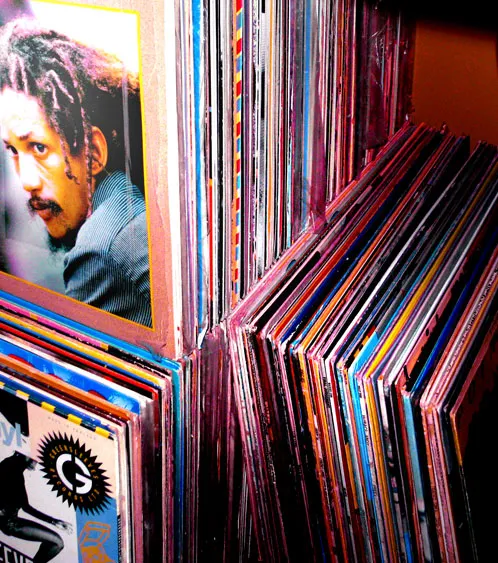
The second thing you notice is that nobody is taking requests. Listening bars are run by selectors, and selectors have opinions. Many rooms schedule full-album sets at fixed times — say 9 p.m. and 10:30 p.m. — and the staff will happily tell you what is coming and why. Handwritten notes about a pressing, a reissue, the year a record was cut. A one-page program, sometimes with a short essay.
That curation is the actual product. Anyone can put on a record. Very few people can sequence an evening so a 1974 folk album lands next to a 2026 ambient release and both make sense. The best rooms treat the night like a setlist, with a slow climb and a real landing. It is closer to good radio than to a bar — and the good ones make you want to stay for the next side.
The Sober-Curious Night Out
Then there is the drinking. Or, more accurately, the not-drinking. Listening bars have become an unlikely home base for the sober-curious crowd. Menus lean on low-ABV spritzes, zero-proof cocktails, Japanese tea service, and a single very good pour of something brown. Seating is often ticketed in ninety-minute blocks. You are not there to get loud.
The appeal is obvious once you sit in it. No one has to shout. No one is competing with a DJ. You can have a real conversation between sides and near-total silence during them. And you leave at eleven with your hearing and your dignity intact. For a generation that has made a project out of cutting back, that is not a compromise — that is the whole feature.
Worship or Status Signal?
Here is where the skeptics get a turn, and they are not wrong. Anything that combines vintage audio gear, natural wine, and a reservation system is going to attract people who are there to be seen not listening. When a bar prints its cartridge specs on a card, some of that is reverence and some of it is jewelry. There are rooms where the system is more carefully curated than the crowd.
But the cynicism only goes so far. Spend an hour in a good one and you will watch someone get visibly wrecked by a song they have heard a thousand times — because this time they heard the bass line, or the room, or the take that was not the single. People bring their parents' records. People tear up a little. People ask the bartender what pressing that was.
The truth is probably both things at once. A status signal can still be a door. Plenty of people walk into a museum for the photo and stay for the paintings.
House Rules Worth Knowing
First-timers should arrive with expectations adjusted. Do not request a song. Order before the side starts, not during. Put the phone face down and leave it there — most rooms ask, a few enforce. Talk quietly between tracks, never over them. And if the room runs a full-album set, sit through both sides. The second side is usually why the record was chosen in the first place.
Why the Room Sticks
The reasons listening bars are landing right now are not mysterious. Concerts got expensive. Headphones got everywhere. Bars got loud in a way that stopped being fun somewhere around 2019. What is left is a small room, a good system, and a record somebody loves enough to play for strangers.
That is a low bar, and it turns out a low bar is enough. You do not need a festival wristband or a wall of screens. You need a chair, a pour, and forty-three minutes of somebody else's taste. Bring nothing but your attention.