Why the Most Unforgettable Concerts Feel Less Like Shows and More Like Holy Ground
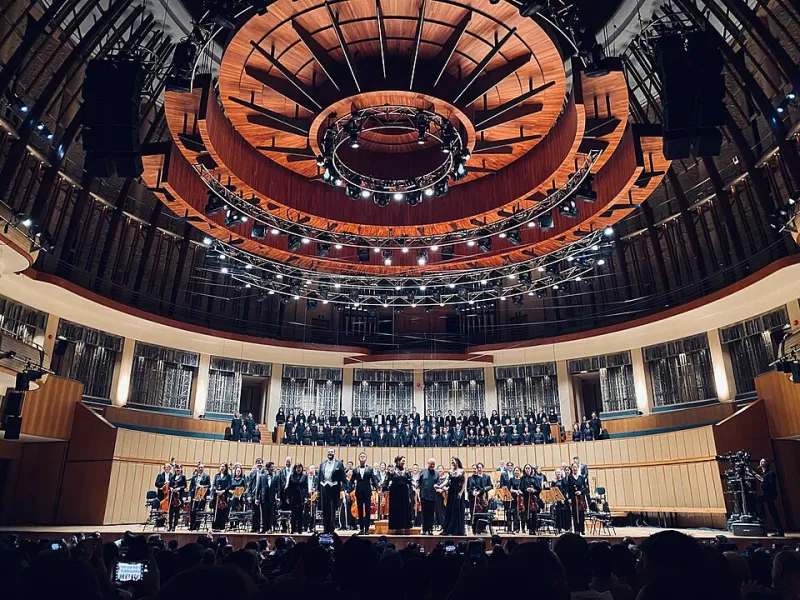
Photo: Phuan Yan Penh, CC BY-SA 4.0, via Wikimedia Commons
There's a moment — and if you've been to one of these shows, you know exactly which moment — where the lights shift, the bass hits somewhere inside your chest, and the room stops being a room. It becomes something else entirely. A place. A feeling. Almost like a destination you've been trying to reach your whole life without knowing it existed.
That's not an accident. That's design.
Over the last few years, a growing number of artists and their creative teams have quietly moved away from the traditional concert format — performer on stage, crowd below, everyone goes home — and started building something closer to alternate realities. Full sensory environments where the music is just one layer of a much bigger experience. And audiences, especially younger ones, are responding in a way that looks a lot less like fandom and a lot more like devotion.
When a Show Becomes a World
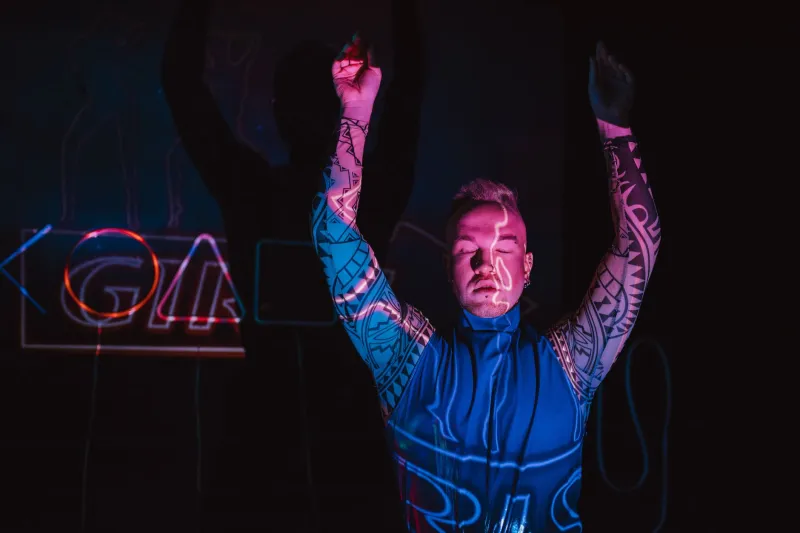
Projection mapping has been around for a while, but what's happening now is different. Artists are commissioning custom visual architectures that respond to the music in real time, turning entire venue walls into living, breathing extensions of the sonic landscape. Some tours are incorporating interactive installations in lobbies and corridors — stuff you engage with before the headliner even hits the stage. Others are building narrative arcs across the full night, so the experience has a beginning, middle, and end that feels closer to cinema than a setlist.
Venues are investing in this too. Some of the most talked-about spaces in cities like Los Angeles, New York, and Chicago are being retrofitted with spatial audio systems, scent diffusers, and lighting rigs sophisticated enough to replicate sunsets, thunderstorms, or deep-space atmospherics. These aren't gimmicks. They're infrastructure for a new kind of emotional delivery.
And then there are the one-offs — the pop-up concerts in converted warehouses, the intimate shows inside planetariums, the outdoor events timed to natural light phenomena. These are experiences that are, by their very nature, impossible to fully recreate or stream. You had to be there. That specificity is the whole point.
The Psychology of the Pilgrimage
Here's where it gets interesting. There's actual science behind why these experiences hit so differently. Psychologists who study collective emotion have long noted that shared peak experiences — moments of awe, surprise, or overwhelming beauty — create unusually strong social bonds between the people who live through them together. When you're standing in a room full of strangers and something genuinely transcendent happens, you leave feeling connected to every person who witnessed it alongside you.
For Gen Z, a generation that came of age during a period of profound social fragmentation and digital saturation, that kind of real-world connection carries enormous weight. They're not just buying a ticket. They're buying belonging. They're investing in a memory that will function as a personal landmark — a before and after.
This is why the willingness to spend is so striking. We're talking about fans who will book flights, split Airbnbs with people they met in online fan forums, and spend upward of $300 or $400 on a single night — not for a superstar legacy act, but for mid-level and even emerging artists who have simply figured out how to build an experience worth traveling for. The transaction isn't really about the music alone. It's about what the music makes possible when it's wrapped in the right environment.
Loyalty That Streaming Can't Buy
Spotify can introduce you to an artist. Instagram can keep you updated. But neither of those platforms can give you the memory of being in a specific room, on a specific night, when something happened that you will genuinely never forget. That's the gap that immersive live experiences are filling — and artists who understand this are building fan relationships that operate on a completely different level than streaming numbers can measure.
When someone has made a genuine pilgrimage for your art — planned a trip, coordinated with friends, navigated an unfamiliar city, stood in line, and then had their breath taken away — they are not a passive listener anymore. They're a witness. They carry the artist's world inside them in a way that a playlist never quite achieves. That's a different category of loyalty, and it tends to be remarkably durable.
You see it in the fan communities that form around these events. The group chats that start before the show and keep going for months afterward. The detailed recaps and video threads. The inside references that function as a kind of shorthand between people who shared the same night. The experience becomes a founding myth for a community, a shared origin story that keeps pulling people back into the orbit of an artist they now feel genuinely bonded to.
What Artists Are Actually Building
The smartest artists right now aren't just thinking about tours as revenue — they're thinking about them as world-building. Each immersive event is another layer of the universe they're constructing around their music, another reason for fans to go deeper rather than wider. It's the difference between an audience and a congregation.
That word — congregation — might sound dramatic, but it's not far off. The language fans use to describe these experiences is consistently spiritual. Transcendent. Life-changing. I felt seen. I felt like I finally found my people. These aren't the words people use to describe a great concert. They're the words people use to describe something that mattered.
And that mattering, that sense of genuine significance, is what creates the cult-like loyalty that immersive experiences seem to generate almost automatically. When an artist builds a world that feels like it was made for you specifically — even when you're sharing it with thousands of other people — the bond that forms is almost impossible to shake.
The Future Is Already Here
This isn't a trend that's coming. It's already arrived. Across the US, artists at every level of the industry are experimenting with immersive formats, and audiences are voting with their wallets and their travel itineraries. The shows that sell out fastest, that generate the most organic word-of-mouth, that leave the longest cultural afterglow — they're almost always the ones that committed to building something more than a performance.
For fans, the message is simple: if an artist you love announces something that sounds genuinely different, genuinely designed to transport you — go. Figure out the logistics. Make it work. Because those nights, the ones that feel less like shows and more like sacred ground, are the ones you'll be talking about for the rest of your life.
And for artists reading this? The audience is ready. They're hungry for it. Build the world, and they will come — and they will stay.