Digital Paradises: How Music's Most Devoted Fans Are Constructing Entire Worlds Online

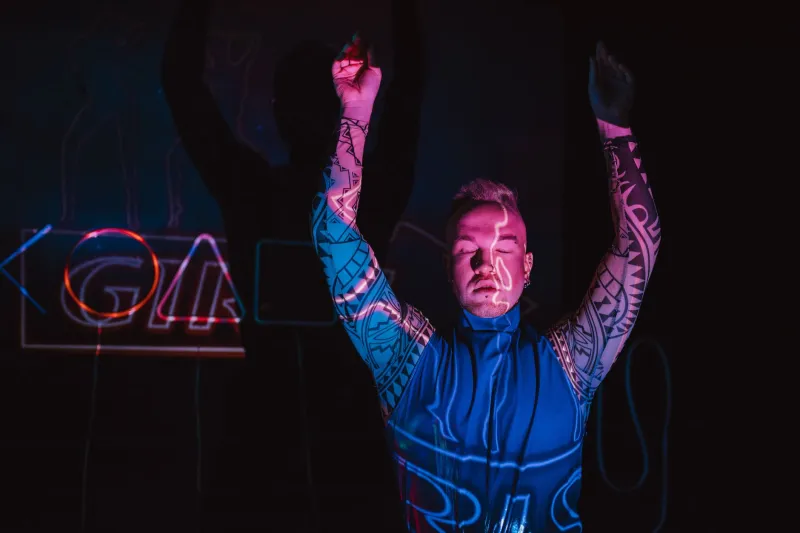
Photo: Slava Strizh, CC BY 3.0, via Wikimedia Commons
There's a Discord server out there — we won't name it, but trust that it exists — where members have spent the better part of two years constructing a detailed fictional mythology around their favorite artist's discography. There are maps. There are named characters. There are timelines that stretch across albums with the kind of obsessive consistency you'd expect from a prestige TV writers' room. And every single day, hundreds of people log on to live inside it.
This isn't a fringe phenomenon anymore. Across the internet, music fandoms have quietly evolved from comment sections and fan accounts into something far more elaborate — self-sustaining digital civilizations with their own rules, their own economies, and their own sense of what it means to belong.
Welcome to the new frontier of fan culture. It's weirder, deeper, and more meaningful than most people realize.
From Listener to Citizen
For a long time, being a music fan meant consuming. You bought the album, you wore the shirt, you maybe showed up to the show. The relationship was transactional, even if it felt emotional. What's shifted in the last several years — accelerated hard by the pandemic and the explosion of platforms like Discord, Notion, and even TikTok — is that fans stopped being passive recipients and started acting like co-creators.
The most dedicated communities now operate less like fan clubs and more like living, breathing creative ecosystems. There are fan-written wikis cataloging every lyric, every music video detail, every cryptic social media post an artist has ever dropped. There are elaborate theories — sometimes called "lore" — that fans develop collectively, weaving an artist's body of work into something that resembles a mythology. And there are hierarchies: moderators, lore keepers, event organizers, artists-within-fandoms who create original work inspired by the original work.
It's a creative economy built entirely out of love. And it's surprisingly sophisticated.
The Architecture of Belonging
What makes these spaces so sticky isn't just the music — it's the structure. Human beings are wired to crave community with clear roles and shared purpose, and these fan worlds deliver exactly that. You don't just join a server and lurk. You earn your place. You contribute theories, you create fan art, you help onboard newcomers, you rise through the ranks. There's a genuine sense of progression that a lot of real-world social environments fail to provide.
For younger fans especially — Gen Z and the older edge of Gen Alpha — these digital worlds often feel more real than their physical ones. The friendships formed inside them cross state lines, time zones, and socioeconomic backgrounds in ways that feel genuinely democratizing. A kid in rural Ohio and a college student in Los Angeles are equals inside the same fan server, bonded by the same obsession.
And the emotional stakes are high. People have genuine heartbreaks when servers fracture. They celebrate when a piece of fan lore gets acknowledged by the artist. They mourn when an era ends. These aren't casual interactions — they're meaningful ones.
The Lore Economy
Here's where it gets genuinely fascinating: some of these fan worlds have developed their own internal economies. Not always in a financial sense, though that happens too — fan-made merchandise, commissioned art, even Patreons dedicated to maintaining fan wikis. More often it's a reputation economy, where social currency is earned through creative contribution and cultural knowledge.
Knowing the lore matters. Being able to trace a lyrical callback across three albums earns you credibility. Writing a theory post that goes viral within the community can make you a minor celebrity inside that world. It's a meritocracy of passion, and for a lot of people, it scratches an itch that conventional social media — with its follower counts and algorithmic validation — never quite manages to reach.
Some communities have even developed their own slang, inside jokes, and shared references so dense that outsiders genuinely cannot follow the conversation. That's not an accident. It's cultural gatekeeping in the most human sense: the creation of an in-group that feels worth belonging to.
Artists Are Paying Attention
The smartest artists and their teams have noticed what's happening in these spaces, and the savvier ones aren't just watching — they're quietly participating. Sometimes it's subtle: an artist retweets a fan theory without confirming or denying it, adding fuel to the speculation engine. Sometimes it's more direct: dropping Easter eggs into music videos that only the most dedicated lore-hunters will catch, essentially rewarding the community for the work they've already put in.
A few artists have gone even further, building official infrastructure — alternate reality games, cryptic websites, hidden messages in liner notes — that essentially invites fans to construct the mythology alongside them. It's collaborative worldbuilding, and it creates a depth of engagement that no marketing campaign could manufacture from scratch.
The key insight here is that these artists aren't condescending to fan creativity — they're legitimizing it. By acknowledging the worlds fans have built, they're signaling that the fan's contribution to the creative vision actually matters. That the story doesn't end at the album. That the universe is genuinely shared.
Escape, or Expansion?
It's tempting to frame these digital worlds as escapism — and sure, there's an element of that. Life is hard. The news is relentless. Having a place to retreat into, a space defined entirely by something you love, is genuinely therapeutic for a lot of people. There's no shame in that.
But calling it pure escapism undersells what's actually happening. These communities aren't just running away from reality — they're building something in its place. They're practicing creativity, developing social skills, learning how to collaborate and lead and navigate conflict. They're making art. They're making friends. They're making meaning.
In a cultural moment when a lot of traditional community structures — churches, civic organizations, even physical neighborhoods — have weakened or fragmented, these fan worlds are filling a genuine social need. They're places where people feel seen, valued, and connected to something larger than themselves.
That's not a small thing. That's actually kind of everything.
What Comes Next
As the tools for building these spaces get more sophisticated — better platforms, more immersive tech, eventually whatever the next iteration of spatial computing looks like — the line between fan world and official creative universe is only going to blur further. We're already seeing artists release content specifically designed for these communities. It's not hard to imagine a near future where the fan wiki is the canonical lore, where the community's collective imagination gets formally woven into the official mythology.
For artists willing to embrace that kind of openness, the upside is enormous: a fanbase that doesn't just listen to your music but lives inside it. A community that will evangelize, create, and sustain interest across years and albums and eras with a loyalty that no streaming algorithm can manufacture.
And for the fans? They get something that music has always promised but rarely delivered so completely: a world of their own, built from the songs that matter most to them.
That sounds a lot like paradise to us.