Beyond the Follow Button: How Shared Values Are Quietly Building the Most Loyal Music Communities on the Internet

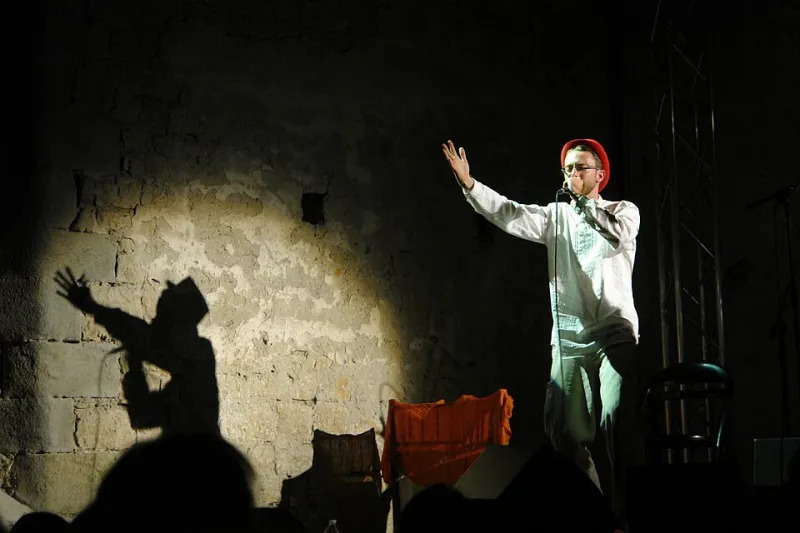
Photo by Photo by tom depont on Unsplash on Unsplash
There's a moment every music fan knows. You stumble into a comment section, a Discord server, or a corner of a subreddit, and something just clicks. The people there aren't just talking about an artist — they're talking like you. Same references, same energy, same weird attachment to a deep cut from a 2019 EP that never charted anywhere. It feels less like a fanbase and more like finding your people.
That feeling isn't an accident. And increasingly, it's the thing that separates music communities that actually last from ones that evaporate the second an artist stops trending.
Likes Don't Equal Loyalty
We've spent the better part of a decade watching the music industry chase engagement metrics like they're the holy grail. Streams, followers, playlist adds, algorithmic reach — all of it matters for visibility. But none of it explains why some artists can go three years without a release and still have a community that shows up harder than ever, while others with ten times the following can't sell out a mid-size venue.
The difference isn't the music alone. It's what the music means — and more specifically, what it means to the people who orbit it together.
When a community is built primarily on numbers, it's fragile by design. Followers come for the moment and leave for the next one. But when a community coalesces around a genuine shared value system — a specific aesthetic, a particular worldview, even a collective sense of humor — something stickier forms. People stop being fans of an artist and start being members of something.
What Shared Values Actually Look Like in Practice
This isn't as abstract as it sounds. Think about the communities that have genuinely transcended their origins as fanbases. They tend to share a few things in common.
First, there's a clear aesthetic identity. It's not just "I like this music" — it's a whole visual language, a set of references, a way of presenting yourself online and offline that signals membership. The music is the entry point, but the aesthetic is the glue.
Second, there's a collective sense of purpose or values. Maybe the community rallies around independent artistry and pushes back against major label culture. Maybe it's built around a specific emotional experience — grief, joy, the particular ache of being young and uncertain. Maybe it's tied to a geographic identity or a subculture that was already thriving before the artist ever showed up. Whatever it is, it gives people a reason to be there beyond the music itself.
Third — and this one's underrated — there's usually a shared language. Inside jokes, recurring references, specific ways of talking about the artist's work that outsiders wouldn't immediately understand. This kind of in-group shorthand is social bonding in its most organic form. It costs nothing to create and it's nearly impossible to manufacture artificially.
The Parasocial Trap
Here's where things get complicated. A lot of what passes for "community" in music spaces is actually parasocial connection — fans who feel deeply bonded to an artist but don't necessarily feel bonded to each other. It's a one-way emotional current, and while it can generate enormous individual loyalty, it doesn't build the kind of community that sustains itself.
Parasocial dynamics aren't inherently bad. Every fan relationship has some element of them. But when a music community's entire identity is centered on stanning — on the artist as an object of devotion rather than a catalyst for connection — it tends to be reactive rather than generative. It flares up around album drops and tour announcements, then goes quiet. It fractures when the artist does something divisive. It competes internally for proximity to the artist rather than building horizontal bonds between members.
The communities that win over time are the ones where members are genuinely invested in each other, not just in the artist. Where someone can post "I'm going through it this week" and get real responses. Where people show up to local shows partly because they know who else will be there. Where the artist is the shared reference point, but the relationships are the actual product.
Why This Matters More Than Ever Right Now
The streaming landscape in 2025 is, to put it mildly, overwhelming. There are more songs released every day than any human being could ever process. Algorithms are increasingly good at serving people music they'll like, which sounds great until you realize it also means music discovery is becoming more passive and less communal. You don't find a new artist through your friends as often as you used to — you find them through a playlist, a TikTok sound, a Spotify radio station.
That shift has made the community around music more valuable, not less. Because when the discovery mechanism is algorithmic, the thing that creates lasting attachment is human. It's the friend who texts you at midnight because a new track just dropped and they knew you needed to hear it. It's the Discord where someone breaks down the production choices on a deep cut at 2am. It's the group that drives four hours to catch a show in a city that isn't yours because you're all going and it would feel wrong not to.
Artists who understand this aren't just making music — they're cultivating a world. They're giving their audience something to live inside, not just consume.
Building Something That Lasts
For artists and the people around them, the practical takeaway is straightforward even if the execution isn't: stop optimizing purely for reach and start investing in depth. That might mean being more specific rather than more broadly appealing. It might mean leaning into a particular aesthetic so hard that it alienates some people — because the ones who stay will stay hard. It might mean creating spaces where fans can connect with each other, not just with you.
For listeners, it means being intentional about the communities you invest in. The ones worth your time aren't the ones with the biggest numbers. They're the ones where you actually feel seen — where the music is a shared language and the people speaking it feel like yours.
That's the thing about real community. You can't fake your way into it and you can't buy your way out of it. You either build it on something real, or you don't really have it at all.
And in a world where everything is competing for your attention, something real is worth more than anything the algorithm can offer.