The Playlist Is the Person: Why Artists' Listening Habits Hit Harder Than Their Biggest Singles
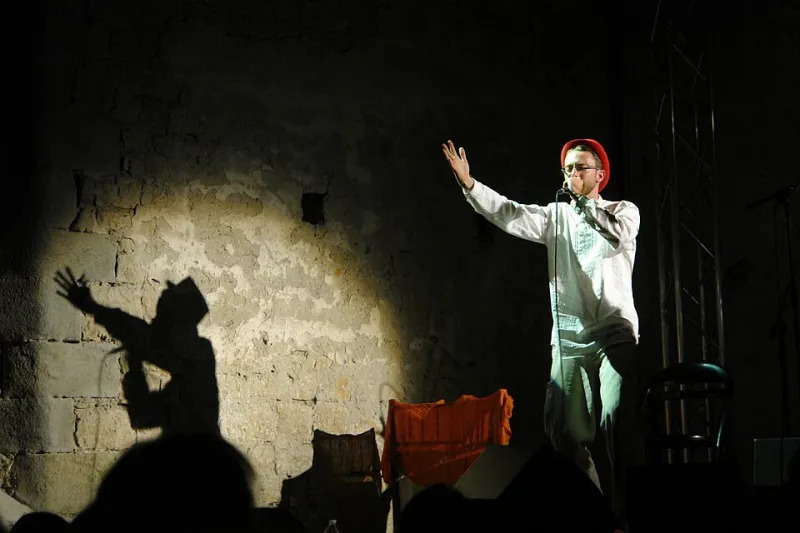
Photo: Yann Forget, CC BY-SA 4.0, via Wikimedia Commons
There's a specific kind of moment that happens in fandom spaces online — someone screenshots an artist's public Spotify profile, drops it in a group chat, and suddenly everyone's losing their minds over the fact that their favorite musician has been quietly listening to a deep-cut Joni Mitchell B-side on repeat. No press release. No rollout strategy. Just a real person's real taste, sitting there in the open.
That moment? It hits different than any carefully engineered single drop ever could.
We're living in an era where artists have more tools than ever to craft a public image — polished visuals, coordinated social campaigns, label-approved messaging. And yet, somehow, the thing that's moving the needle on genuine fan connection isn't the product. It's the playlist.
The Authenticity Gap in a Curated World
Here's the thing about a studio single: by the time it reaches your ears, it's been filtered through producers, A&R reps, marketing teams, and algorithms. That's not a criticism — it's just the reality of how recorded music gets made and distributed at scale. The final product is real, but it's also a performance in the purest sense of the word.
A personal playlist doesn't work that way. When an artist throws together a collection of songs they've been vibing to — whether it's on Apple Music, Spotify, or even a YouTube rabbit hole they shared on their story — that's a window that nobody else opened for them. It's unfiltered. It's Tuesday afternoon in their apartment. It's what they actually feel.
And fans? They can tell the difference immediately.
Research on parasocial relationships — those one-sided emotional bonds people form with public figures — consistently shows that perceived authenticity is the fuel. The more "real" someone seems, the deeper the connection grows. A carefully produced music video can generate admiration. A playlist full of obscure soul records, niche lo-fi beats, and one inexplicable guilty pleasure pop song generates intimacy.
Discovery as a Love Language
There's also something quietly powerful about what happens when an artist's personal taste leads a fan somewhere new.
Say your favorite indie artist has been low-key obsessed with a Nigerian Afrobeats producer you've never heard of. They add a few tracks to a playlist. You follow that playlist because you follow them. Three weeks later, you're telling your friends about this artist you discovered, and somehow the whole thing circles back to that original connection you felt.
Music discovery has always been social — it's how scenes form, how genres spread, how culture moves. But artist-curated playlists have created a new kind of discovery pipeline that feels personal in a way that algorithmic recommendations just can't replicate. Spotify's Discover Weekly knows your data. Your favorite artist knows something else — they know what it feels like to be moved by music, and they're sharing that feeling directly.
That's a fundamentally different transaction. And it builds loyalty in a way that chart performance alone never could.
The "Knowing" Problem in the Streaming Era
Ask someone who they think they know better — a celebrity they've followed online for years, or a coworker they see every day — and the answer might surprise you. Parasocial bonds can feel genuinely deep, even when the connection is entirely one-directional. The streaming era has added a whole new layer to this dynamic.
Before platforms like Spotify made listening habits semi-public, the only way to know what an artist was into was through interviews, liner notes, or the occasional "artists I love" shoutout on social media. Now, you can literally see the last song someone played. You can follow their public playlists and watch them evolve in real time. You can notice when they add a heartbreak song three days in a row.
It's voyeuristic in the best possible way — and artists who lean into it, who actually maintain real, personal playlists rather than promotional ones, are building something that labels can't manufacture: the feeling that you actually know them.
That feeling is worth more than almost any marketing spend.
When the Strategy Becomes the Sincerity
Now, it's worth being real about the fact that some of this has become self-aware. Artists and their teams have figured out that personal playlists work, which means some of what looks authentic has been strategically shaped to appear that way. A playlist that just happens to feature artists on the same label, or songs tied to a brand partnership, isn't quite the same thing as genuine taste-sharing.
Fans are increasingly sharp about spotting the difference. The playlists that generate real conversation and genuine connection tend to be the messy ones — the ones with weird genre jumps, unexpected throwbacks, songs with no obvious commercial logic. The ones that make you think, why does this person love this specific thing? and send you down a rabbit hole trying to figure it out.
Authenticity in this space isn't about being unstrategic. It's about being actually yourself, even when that self is a little strange or unpredictable. The artists who get this right aren't performing realness — they're just sharing it.
What This Means for How We Think About Artists Now
The shift happening here is subtle but significant. For a long time, "knowing" an artist meant knowing their catalog — their hits, their albums, their eras. Fandom was organized around the work.
Now, fandom is increasingly organized around the person behind the work. And one of the most direct lines to that person, weirdly enough, runs straight through their listening habits.
There's something kind of beautiful about that. In a world where everything is produced and packaged and optimized, a playlist is one of the last spaces where an artist can just be someone who loves music — the same way their fans do. That shared love, that mutual recognition across the parasocial divide, is what makes the connection feel real.
Your favorite artist's biggest single might have been the thing that got your attention. But their 3am playlist? That's probably what made you stay.