Some Albums Don't Just Play — They Pull You In and Won't Let Go
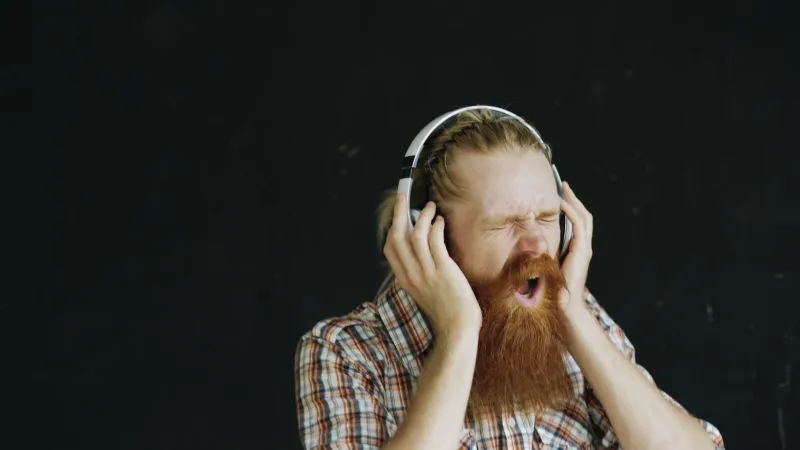
You know the feeling. You hit play on a certain album and something shifts. The room feels different. Your brain goes somewhere else entirely. It's not just that the music is good — it's that it feels like somewhere. A specific place with its own weather, its own light, its own rules about how things work.
That's not an accident. And it's not magic either, even if it kind of feels like both.
A growing number of listeners — particularly Gen Z — are actively seeking out albums that function less like playlists and more like portals. In an era where the single reigns supreme and the algorithm serves you one disconnected bop after another, the immersive album is having a serious moment. Not a comeback, exactly. More like a reclamation.
What Makes an Album Feel Like a World
The short answer is intention. The longer answer involves a pretty specific set of choices that artists make — consciously or instinctively — that signal to your brain: this is a place, not just a sequence of songs.
Take Igor by Tyler, The Creator. From the opening seconds, you're somewhere. The production is thick with live instrumentation, jazz chords, and sample-flipped soul. Every track bleeds into the next. The narrative — a messy, unrequited love story told through character and costume — gives the whole thing the feeling of watching a film you can only hear. Nothing is random. Nothing feels like filler. The album has a texture, almost architectural.
Björk has been doing this for decades. Homogenic, Vespertine, Medúlla — each one is essentially a different planet. She's talked openly about treating albums as unified emotional environments, where the instrumentation, the vocal processing, even the silence between notes all serve a coherent sensory vision. Listening to Vespertine in headphones feels like being inside a snow globe that someone has just shaken. You don't just hear it. You inhabit it.
More recently, artists like Janelle Monáe, Kendrick Lamar, and Caroline Polachek have pushed this further, using narrative arcs, recurring motifs, and deliberately sequenced sonic contrast to build something closer to a cinematic experience than a traditional album rollout.
The Psychology Behind the Pull
There's actual science here. Psychologists who study music and emotional regulation talk about something called "narrative transportation" — the mental state where you become so absorbed in a story or environment that your sense of real-world time and place temporarily fades. Great novels do it. Great films do it. And great albums, constructed carefully enough, absolutely do it.
The key ingredients? Consistency of mood and tone, a sense of movement or journey, and enough detail to reward attention without overwhelming it. When an album delivers all three, your brain starts treating the listening experience less like consuming content and more like being somewhere.
For a generation that grew up with infinite content and near-zero downtime, that kind of mental escape isn't just pleasant — it's genuinely restorative. It's the sonic equivalent of closing every browser tab.
Why Gen Z Is Done With the Single
Here's the cultural context that makes this trend make sense. Gen Z listeners came of age during the peak of algorithmic streaming, where discovery is constant and attention is fragmented by design. The average playlist hop, the endless shuffle, the Spotify Discover Weekly rabbit hole — it's stimulating, sure. But it doesn't give you anywhere to land.
That's exactly why so many younger listeners are gravitating toward albums that demand to be heard front to back. Not out of nostalgia — most of them weren't alive when the album was the dominant format — but out of a genuine hunger for depth. For coherence. For something that feels curated by a human mind with a specific vision, not assembled by an algorithm chasing engagement metrics.
Reddit threads, TikTok "album journey" videos, and Discord servers dedicated to deep-listening sessions are all symptoms of the same thing: people want music that takes them somewhere specific and keeps them there.
Production Choices That Build Worlds
So what are the actual sonic tools that make this happen? A few worth paying attention to:
Transitional moments. The way songs end and begin — whether they bleed together, cut hard, or leave deliberate space — tells you immediately whether you're in a world or just a collection. Albums that feel immersive tend to treat track transitions as part of the architecture.
Recurring sonic motifs. A specific chord progression, a particular instrument, a vocal texture that reappears in different contexts — these are the threads that stitch an album into a coherent space. You hear them and your brain says: I'm still here. I'm still in this.
Dynamic range. The best world-building albums breathe. They go quiet before they go loud. They let you settle into a mood before shifting it. That contrast is what makes the emotional peaks hit so hard — you've been living in the valley long enough to feel the climb.
Thematic cohesion. Lyrics, titles, artwork, even the album name itself — when all of these elements are in conversation with each other, the whole thing becomes bigger than any individual song. The world extends beyond the music into everything surrounding it.
The Paradisia of Sound
There's a reason we talk about certain albums as eras. Not just because artists rebrand between projects, but because each great album, when it works the way it's supposed to, is genuinely a different reality. A different emotional climate. A different version of you that only exists while you're inside it.
That's the thing about world-building albums — they don't just change what you're listening to. They temporarily change who you are while you're listening. You come out the other side having been somewhere. Having felt something that doesn't have a name in regular life.
In a world where music is more available than ever and attention is more fragmented than ever, the albums that manage to build actual worlds aren't just good art. They're a lifeline. A reminder that music can still be a place — one you can return to whenever the real world gets too loud.
Some of the best ones are waiting for you right now. All you have to do is put on your headphones and walk in.