15 Seconds to Stardom: How Short-Form Video Blew Up the Old Music Industry Playbook
Not long ago, breaking into the music industry meant playing the long game. You built a local following, recorded demos, sent them to managers, got ignored, tried again, maybe landed a showcase, maybe got signed, maybe — maybe — got your music in front of enough ears to matter. It was slow, gatekept, and brutally selective.
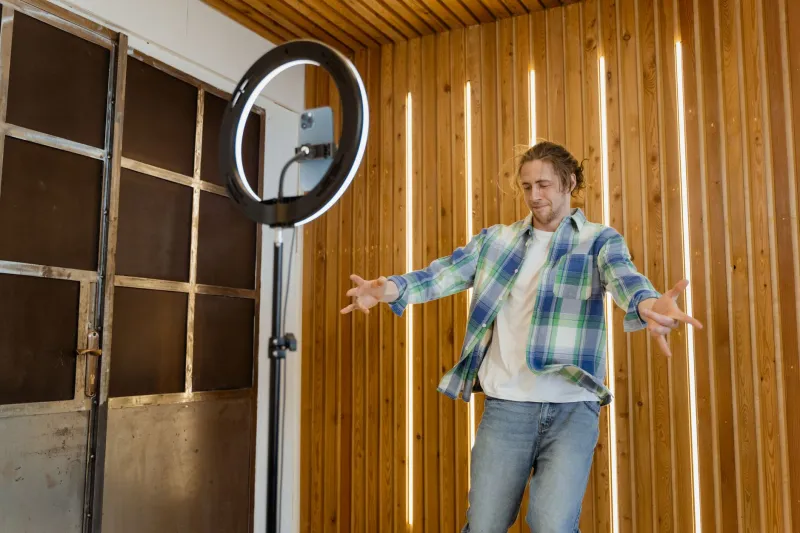
Then TikTok happened. And now a song recorded in a spare bedroom in Tulsa can reach ten million people before the artist has played a single live show.
We're in the middle of one of the biggest structural disruptions the music industry has ever seen, and most people are still processing what it actually means.
The Old Gates Are Off the Hinges
For decades, major labels operated as the essential infrastructure of music discovery. They controlled radio relationships, playlist placement, press access, and promotional budgets. An artist without label backing was, for all practical purposes, invisible at scale. The gatekeepers weren't just powerful — they were necessary.
Short-form video changed the cost structure of discovery overnight.
When Lil Nas X dropped "Old Town Road" and watched it explode on TikTok before Billboard even knew what to do with it, that wasn't just a quirky cultural moment. It was a proof of concept that shook the entire industry. Here was an artist who used a platform's organic mechanics — trends, duets, sound reuse — to generate the kind of reach that would have previously required a seven-figure promotional campaign.
Since then, the examples have kept stacking up. Artists like Conan Gray, Olivia Rodrigo (pre-label push), Tai Verdes, and dozens of less-mainstream names have all leveraged short-form video to build audiences that labels then came to them to access. The power dynamic, quietly but unmistakably, has flipped.
The Numbers Behind the Noise
The data on this shift is striking. According to multiple music industry reports from the past two years, a significant majority of major label A&R signings now involve artists who already demonstrated viral traction on short-form platforms before any formal deal was on the table. Labels aren't just aware of TikTok — they've rebuilt their scouting pipelines around it.
Meanwhile, streaming data tells its own story. Tracks that go viral on TikTok routinely see Spotify stream counts spike by 300-1,000% within days — not because of playlist placement or radio play, but because millions of people heard three seconds of a hook in a video and immediately went looking for the full song.
The discovery pathway has been fundamentally rewired. Radio used to be the top of the funnel. Now it's a clip. A sound. A moment.
Artists Who Wrote the New Rulebook
Take the case of Nicky Youre, whose 2021 track "Sunroof" spent months building organically on TikTok before cracking mainstream radio charts. Or consider Gayle, whose "abcdefu" went from TikTok trend to Grammy nomination in a matter of months. These weren't artists who got signed and then promoted — they were artists who earned their audience first and negotiated from a position of leverage.
Independent artists are taking note. Many are deliberately structuring their release strategies around short-form virality: creating songs with built-in "hook moments" optimized for the 15-second clip format, releasing snippets before full tracks, and building communities on TikTok and Instagram Reels before ever approaching a distributor.
The bedroom producer who used to dream about getting a label's attention now has a more achievable first goal: get a sound. Get a trend. Get a clip.
Labels Aren't Going Down Without a Fight
For all the disruption, it would be premature to write the major labels' obituaries. They're adapting — sometimes awkwardly, sometimes effectively.
Several labels have launched dedicated short-form video teams whose sole job is to identify trending sounds before they peak and move quickly to sign the artists behind them. Others are investing in TikTok promotion deals, paying for branded content integration, and even creating fake "organic" trends to seed their artists' music into the algorithm's discovery loop.
That last tactic has drawn significant criticism. When it came out that certain labels were paying TikTok creators to use specific songs without disclosure, the backlash was real — and it highlighted a core tension in this new landscape. Authenticity is the currency of short-form video culture. The moment something smells manufactured, audiences clock it fast.
Labels are also increasingly offering shorter, more flexible deal structures to artists who come in with existing audiences. The 360 deals that once gave labels a cut of every revenue stream are giving way to more artist-friendly arrangements — not out of generosity, but because artists with leverage now have options their predecessors never did.
The Catch Nobody Talks About
Here's what the success stories don't always show: virality is brutal, random, and almost impossible to manufacture intentionally. For every Nicky Youre, there are thousands of artists who created TikTok-optimized content obsessively for a year and never broke through. The algorithm rewards novelty, timing, and a kind of cultural luck that no strategy fully controls.
There's also the question of what virality actually builds. A song going viral creates listeners, not necessarily fans. The difference matters enormously for an artist's long-term career. Turning a 15-second moment into a sustained music career still requires the same fundamentals it always did — great music, consistent output, real community.
The discovery pathway has changed. The work hasn't.
What This Means for Music's Future
At its best, the TikTok era is genuinely democratizing. Artists from communities that traditional labels historically underserved now have a direct line to global audiences. Genres that wouldn't have gotten major label investment are finding massive fanbases organically. The sheer diversity of what's breaking through short-form video is, by most measures, wider than what radio gatekeeping ever produced.
At Paradisia, we're here for the chaos. A world where the next great artist might be discovered through a 15-second clip filmed in someone's car is a world with more room for surprise, more room for the unexpected, and more room for music that doesn't fit neatly into what any algorithm — label or platform — predicted people would want.
The old playbook is shredded. The new one is still being written, one clip at a time.